
When families begin comparing assisted living vs. nursing home options, the decision often comes down to one question: what level of support is needed now, and how might those needs change over time?
Assisted living is designed for older adults who may need help with daily tasks like dressing, bathing, medication reminders, meals, or housekeeping while still maintaining independence. A nursing home, also called skilled nursing, provides 24-hour medical care, supervision, and rehabilitation for individuals with more complex or ongoing health needs.
The key difference is the level of care needed each day. Assisted living supports daily routines, while nursing homes provide medical care and ongoing monitoring.
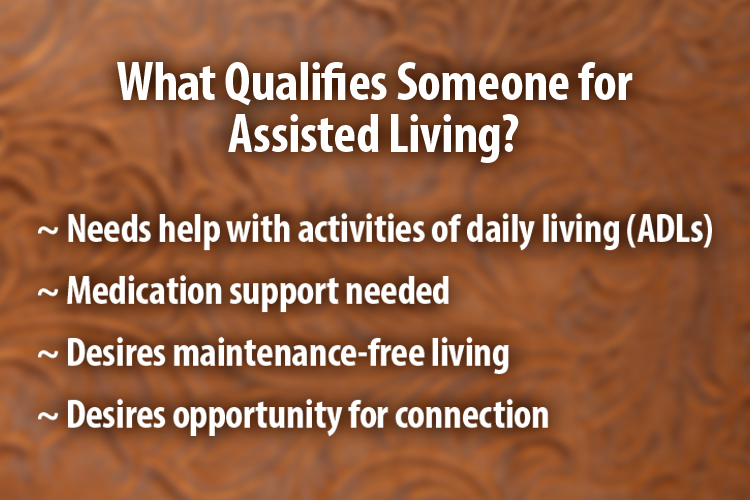
What Qualifies Someone For Assisted Living?
Assisted living may be appropriate when daily life starts to feel more challenging to manage alone, but full-time medical care isn’t required.
This may include:
- Help with activities of daily living (ADLs): Support with tasks like bathing, grooming, or dressing
- Medication support: Reminders or assistance to help ensure medications are taken safely
- Maintenance-free living: Relief from the demands of cooking, housekeeping, and laundry
- Opportunities for connection: More time with others and ways to stay engaged in daily activities
In many cases, assisted living may be a good fit for someone who is mostly independent but would benefit from a little extra help throughout the day.
With assistance available throughout the day, it’s much easier to focus on what really makes life fulfilling, like enjoying routines, exploring interests, and spending time with loved ones.
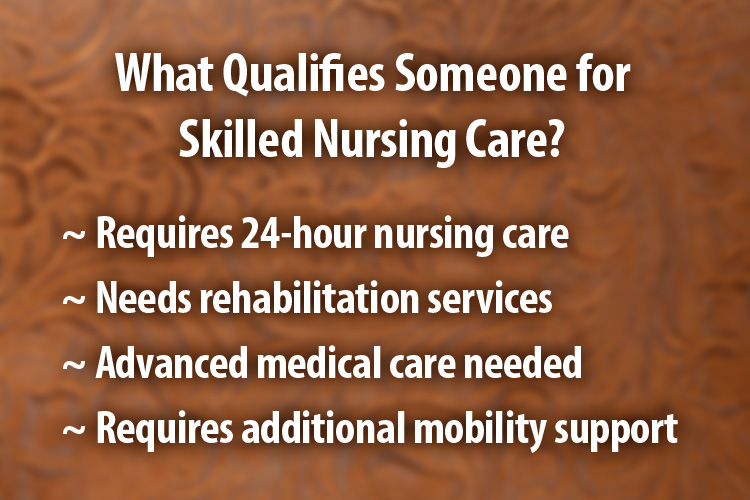
What Qualifies Someone For Skilled Nursing Care?
Skilled nursing care, often referred to as a nursing home, may be appropriate when health needs become more complex and require ongoing medical support.
This may include:
- 24-hour nursing care: Ongoing support and monitoring from licensed nurses
- Rehabilitation services: Physical, occupational, or speech therapy after illness, injury, or surgery
- Advanced medical care: Services like wound care, IV therapy, or injections that require professional oversight
- Additional mobility support: More hands-on help with movement, transfers, or daily physical needs
In many cases, this level of care is needed when someone is no longer able to safely return home after a hospital stay or requires ongoing medical support.
For some individuals, skilled nursing is short-term and focused on recovery, with the goal of regaining strength and returning to a more independent setting. For others, it provides ongoing support for more complex health needs.
What Is Daily Life Like In Assisted Living Compared To A Nursing Home?
Daily life reflects the level of care provided.
In assisted living, the environment is more residential. Residents live in private or semi-private apartments, share meals, and have access to social activities and common spaces. Support is available, but the focus remains on independence and choice.
In a nursing home, daily life is more structured around care. Medical staff are available at all times, and routines often include treatments, therapies, and health monitoring. Residents still have opportunities for interaction, but schedules are built around their care needs.
This difference in structure can play an important role in how comfortable and supported someone feels in each setting.

What Should You Expect When It Comes To Cost And Coverage?
Cost is an important part of comparing assisted living vs nursing home care, and the difference largely comes down to the level of support provided.
In general, assisted living is more affordable because it focuses on personal care and daily support. Nursing home care is typically more expensive due to the higher level of medical services and 24-hour care.
How care is paid for depends on the level of need:
- Medicare: Generally, Medicare does not cover long-term assisted living or long-term nursing home stays. It is designed to cover short-term “skilled” needs, such as rehabilitation following a qualifying hospital stay.
- Medicaid: For those who meet medical and financial eligibility, Health First Colorado (Colorado’s Medicaid program) may help cover the cost of long-term nursing home care.
- Private Options: Many families use a combination of personal savings, home equity, or long-term care insurance to fund assisted living, which follows a private-pay model.
Because coverage depends on individual circumstances, it is important to consider both current needs and how those needs may change over time.

How Can A Continuing Care Community Support Changing Needs Over Time?
One of the biggest challenges families face is not just choosing care for today, but planning for what may come next.
A continuing care community, like Sunny Vista in Colorado Springs, offers multiple levels of support in one location. This allows residents to move between assisted living, rehabilitation, and skilled nursing as needed, without starting over in a new environment. In some situations, care needs change gradually over time, while in others they shift more quickly after an illness or injury.
Having multiple levels of care in one community can offer several important benefits:
- Continuity of relationships: Residents can remain in a familiar environment with the same friends and care teams, even if their health needs change. This stability is vital for emotional well-being.
- Stability for families: You avoid the emotional and physical stress of moving your loved one to an entirely different community if they eventually require higher medical support.
- More seamless transitions: Because the team already knows the resident’s history, personality, and preferences, transitions between care levels are handled with deeper personal insight and compassion.
For many families, having a plan in place can bring a greater sense of clarity and confidence when making decisions.
If you are starting to explore senior living options in the Colorado Springs area, it can help to talk through your situation and better understand what type of support may be the right fit, both now and over time.
Contact us today to learn more about the different levels of care available or to ask questions about your specific situation.